In the education community, it is almost heretical to say that schools are not the center of education. Sean Reardon of Stanford University is, then, almost a heretic. In a New York Times op-ed titled No Rich Child Left Behind, Reardon states:
It may seem counterintuitive, but schools don’t seem to produce much of the disparity in test scores between high- and low-income students.
In the four days since its publication, the article has garnered 1169 comments (as of this writing) – and that is just on the Times comment platform. Reardon is creating a stir. And well he should.

A child’s early experiences matter tremendously for the rest of a child’s life. Reardon’s argument is that the rich understand this well, and have hyper-invested in their children in the earliest years of life. Consequently, there is not just a gap between the poor and the rest; there is a gap between the rich, the middle class, and the poor.
Why do parents matter?
- Parents mold your brain.
Early experiences shape the physical structure of a child’s brain. Think of it as building the hardware that a child will have – and use – for the rest of her life. Parents who recognize this dynamic and engage in ‘concerted cultivation’ give their children a significant advantage over other children. The classic example of this is the Hart/Risley language study.

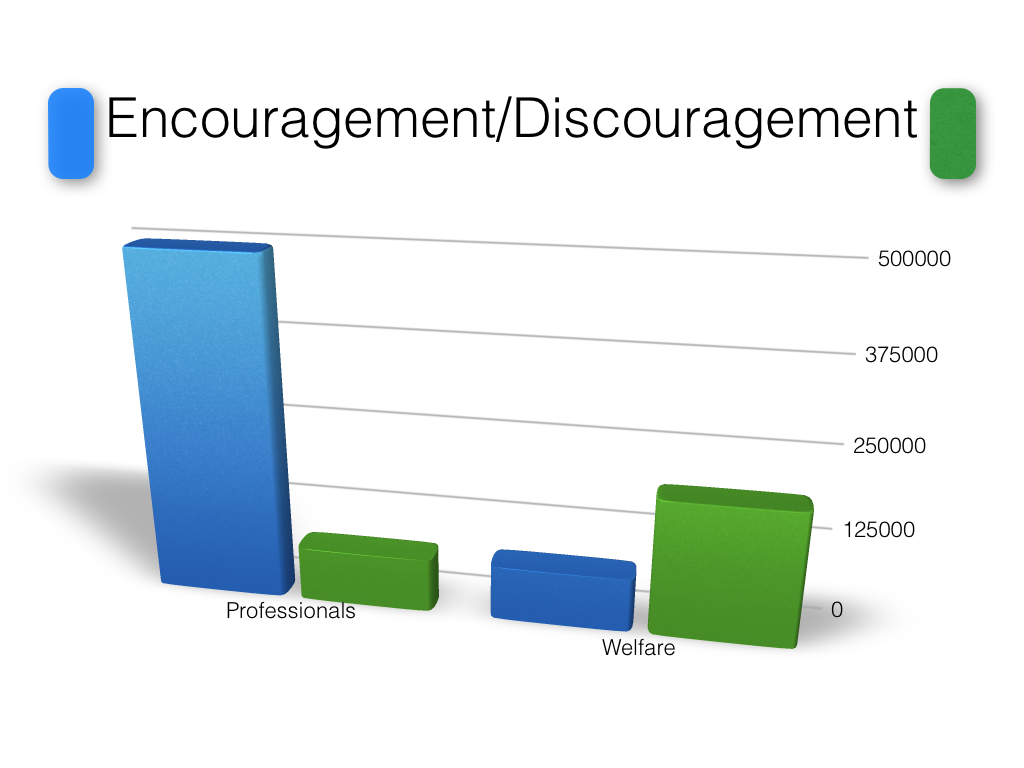
They counted the number of words children heard in different home environments and estimated that children of professionals would hear 500,000 affirmations by the age of 3, whereas their counterparts whose parents were on welfare would hear only 80,000 affirmations by the same age. The children of professionals would hear 80,000 discouragements; children in families on welfare would hear 200,000 discouragements. It hardly needs to be said that those experiences have lifelong implications. - Parents shape your character.
Character formation is not distinct from brain development. Early experiences shape a child’s habits – of how to treat others, how to take care of the material world. These habitual actions and postures are character. This is not a sphere in which wealthier children necessarily have privilege. In this sphere, having parents who are wise, just, and loving matters far more than their income or education. - Parents give you opportunities.
The very concrete opportunities that parents provide are formative. This is most obviously true with language. Young children who hear multiple languages in the home in the earliest years acquire those languages as mother tongues by virtue of the opportunities that their parents created. Is it any wonder that elites enroll their young children in Mandarin classes?
What’s missing?
Reardon has written the best piece on education and parenting that I have seen appear in the Times. It is to be celebrated, discussed, and used to take action. However, there are two dynamics that need more attention than they received in Reardon’s op-ed, one of which I have already mentioned.
- The power of networks
It isn’t just that rich parents provide more and better opportunities for their children to learn. They also create a network of social elites through which their children will have social opportunities that far exceed their peers of like ability and different social strata. That’s why Upper East Side preschools can charge $40,000 per year.
- The force of character
Much more emphasis needs to be given to the the role that parents have in forming character. Character is both more malleable and more important than intelligence, and wealth is no necessary privilege (it can even be a significant liability) in forming virtue. The character of children of elites matters immensely because they will inherit power and influence. The question is whether they will use it well.