Improving the Odds for Children by Asking Better Questions

In the introduction to How Children Succeed: Grit, Curiosity and the Hidden Power of Character, Paul Tough frames the problem of improving the lot of poor children:

“We haven’t managed to solve these problems [how early experiences connect to adult outcomes] because we’ve been looking for solutions in the wrong places. If we want to improve the odds for children in general, and for poor children in particular, we need to approach childhood anew, to start over with some fundamental questions about how parents affect their children; how human skills develop; how character is formed.” (xxiv)

The answer those questions is that childhood – and early childhood in particular – is the apprenticeship of being human. Character is formed and skills are developed in the context of relationships – which is why the impact of parents in those early years is so profound.

There is another line of questions that needs to be pushed farther than Paul Tough ventured.

  1. Is it possible that qualities and skills that enable “success” in contemporary society may be acquired, and yet the person be bereft of real virtue?
  2. How can we cultivate in children the kind of virtue that enables them to persevere in pursuit of the good even, and especially, when pursuing the good means losing rather than winning? (Think of Martin Luther King Jr. receiving death threats and persevering until he was assassinated.)

These are the kinds of questions we must ask if we are serious not just about getting kids through high school, but about the pursuit of real virtue and flourishing communities.

The Rediscovery of Character and The Heretical Imperative

In a New York Times op-ed yesterday, David Brooks highlighted the legacy of James Q. Wilson. Brooks argues that Wilson should be remembered not just for his “broken windows” theory on how to reduce crime, but for his emphasis on the importance of character for social well-being.

“At root,” Wilson wrote in 1985 in The Public Interest, “in almost every area of important concern, we are seeking to induce persons to act virtuously, whether as schoolchildren, applicants for public assistance, would-be lawbreakers or voters and public officials.

Character is formed, necessarily, in community; and therefore the beliefs, values, and habits of the community are of utmost importance. That truth makes our current situation all the more disturbing. Peter Berger, a sociologist, has described our time as being constrained by “the heretical imperative.” We are commanded to choose our own values, beliefs, and religion. The normative structures that were passed down from generation to generation through tradition (meaning ‘to hand down’ or ‘to hand over’) are now challenged. The new norm is to choose your own.

The rediscovery of character as important is important. However, it is only the first step. Wilson was raised in a nation and generation that had a rich an stable tradition handed down to it. Our children desperately need a rich, robust tradition that tells them virtue is a norm to which they must conform – not one which they may define as they so please. Our children will be bear the fruit of our character, as they are apprenticed to us in discerning and cultivating virtue.

Social Mobility IMPEDES Social Mobility

The New York Times recently carried an article by Jason DeParle titled Harder for Americans to Rise From the Lower Rungs, which highlights the current challenges of social mobility in the United States as compared to other places, and as compared to other times in history in the United States. Angela Glover Blackwell, founder and CEO of PolicyLink, responded with a letter titled Invitation to a Dialogue: Moving Up in America that develops her theme that: ““Movin’ on up” is especially hard for children born poor and black, or poor and female.”

Both DeParle and Blackwell have disturbing data to report. The long and short of it is that children born to parents in the bottom income quintile have poor odds of leaving that income strata. Furthermore, that quintile is over-represented demographically by women and blacks, who are statistically less likely to progress out of that quintile.

Yet both DeParle and Blackwell are shockingly quiet on what seems to be the obvious effect of social mobility. It is that people leave. Social mobility isn’t just about levels of income. It is about where you live, and with whom you choose to associate. Families that seek to leave cyclical poverty often leave communities of poverty to pursue greater opportunities. They move to a place with less crime, better schools, cleaner neighborhoods and more motivated peers; and if they can’t leave, they seek to send their children to schools outside of the community of poverty. The natural, and inevitable, consequence of social mobility is the increasing concentration of poor individuals and families in the communities they leave behind. In short, social mobility is part of the problem for those for whom social mobility is hardest.

This was clear in my experience teaching in Brooklyn in one of those communities in crisis. One of my African-American colleagues, who had taught in that school for 25 years, counseled any parent with the wherewithal to get their children into a different and better school. “No Child Left Behind” made that easier. Since we were a “school in need of improvement,” every parent had the right to request a transfer to a school-not-in-need-of-improvement. The net effect? The parents who wanted a better education and more opportunities for their kids got them into other schools. In other words, we lost the most exemplary parents and their children. Our school became increasingly concentrated with children who had many of the risk-factors for academic failure: father absence, parental drug abuse, poor nutrition, unstable home life, etc.

If we truly care about social mobility for the poorest Americans, we will have to face squarely these issues:

  1. Parent involvement is the single best predictor of a child’s academic achievement, which in turn is a significant factor in social mobility.
  2. Father absence, which is normal in the poorest communities, is a significant risk factor for health, educational attainment, crime, abuse and neglect, substance abuse, and poverty.

In their earliest years, children are apprenticed to their parents in learning to make their way in the world. If we care about their mobility, we need to care for and support their parents.
Repetition, Resolve & Reflection

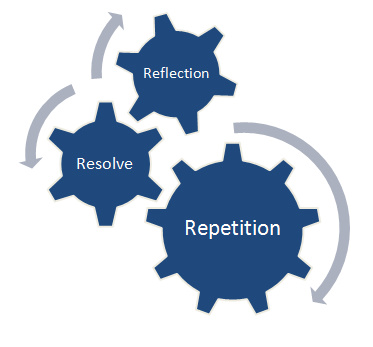
In a family, children learn not only how to read and write, and how to hold a fork and knife; here they learn how to be human. The power of this process is that it happens continually in the context of relationships regardless of the degree to which parents embrace and attend to this responsibility. Its force is evident in three gears, each with its own mechanical advantage:

Repetition: We are what we repeatedly do. A child’s experience of normal in the early years naturally and inevitably becomes the standard by which they judge all other experience. What parents present to them as good and bad, worthy and unworthy, likewise inevitably defines their norms.

Resolve: We choose one thing instead of another, and these choices have consequences. For example, parents can choose to read with their children, or choose to put them in front of a television. From these daily decisions, children learn what it is to be human.

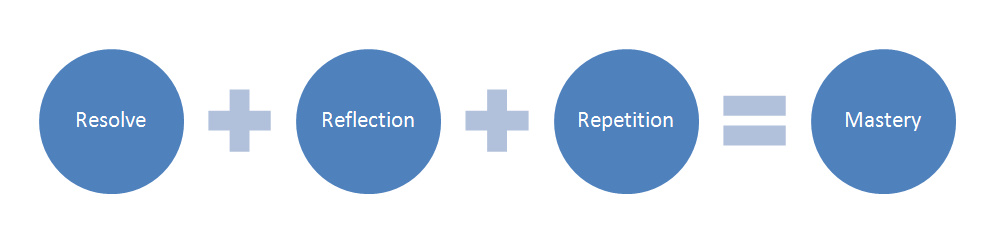
Reflection: Socrates famously stated, “The unexamined life is not worth living.” My repeated actions always represent what I value. But do they embody what I want to value? Where do I need to break out of a rut, or establish a new routine that will be good for my family? Reflective resolve, used repeatedly, will produce a decidedly different outcome.

The Apprenticeship of Being Human

Early childhood is the apprenticeship of being human. Like the apprenticeship of an artist, it is composed of both explicit instruction and continual modeling within a personal relationship. The disproportionate influence of these early years lies in the fact that apprenticeship occurs constantly in children’s most primary relationships during a period of unparalleled brain growth that has a lifelong impact on a child’s character, competence, creativity, health and ability to collaborate. For better or for worse, the family is the studio in which children begin the apprenticeship of being human.